




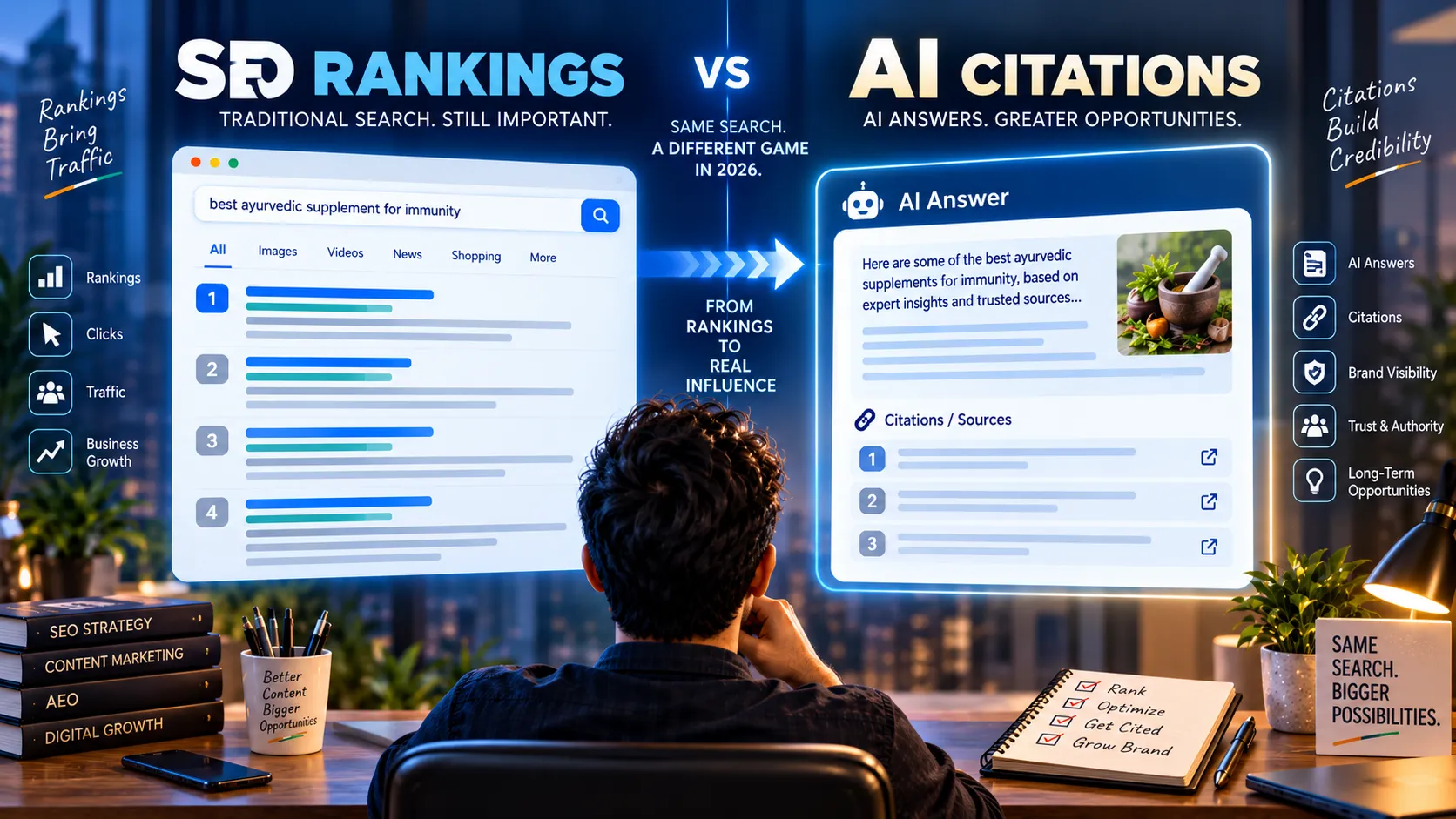
For years the goal was simple: reach the first page of Google, then climb as high as possible.
That goal still matters. It is no longer complete.
In 2026, a growing number of searches produce an AI-generated answer before any traditional result is clicked. When that happens, the important question changes. It is no longer only “Do we rank?” It becomes “Does the system use us as a source?”
A page can sit in a strong organic position and still be ignored by the summary above it. Another page, sometimes from further down the results, can be chosen because it states the point more clearly or feels more useful to the system.
This shift does not make rankings useless. It makes them incomplete.
The New Visibility Split
Search results now often contain two layers:
- The AI-generated overview or summary
- The classic list of links
Many users get what they need from the first layer. Others still click through. Your reporting and your content strategy need to account for both.
If you only celebrate ranking position, you can miss a quieter problem: your brand is absent from the answer that many people actually see. You can also miss a quieter win: your content is being referenced even when the click never comes.
Both situations are becoming common.
Why Citations Carry More Weight Than Before
A citation inside an AI answer does several useful things:
- It places your name and perspective in front of people who may not click anything
- It builds familiarity that can later turn into branded searches
- It signals to other systems and readers that your content is considered reliable enough to use
- It gives you a measurable form of visibility that classic click data does not fully capture
This is why the newer Search Console AI-related reports matter. They help you see a layer of performance that older metrics were never designed to show.
Rankings tell you where you stand in the list.
Citations tell you whether you are part of the answer.
What This Changes in Practice
Content priorities shift
Pages that clearly answer the main question, use specific language, and present information cleanly have a better chance of being selected. Long, diffuse articles that hide the point often lose out.
Measurement expands
Teams need to look at both traditional performance and AI-related signals. A page with softer clicks but rising citations may still be doing important work.
Internal linking and topical depth matter more
Systems tend to favour sources that appear coherent and well-supported. Orphan pages and thin supporting content become bigger weaknesses.
Early, useful content gains an advantage
In seasonal topics such as festive planning, pages that appear early and state the key facts clearly have more opportunity to be referenced while interest is building.
How to Respond Without Overreacting
You do not need to abandon classic SEO.
You need to add a second standard:
- Keep working on rankings and technical foundations
- Also make sure your strongest pages are easy to cite
That means clearer openings, better structure, stronger answers to real questions, and consistent quality across related articles. The same habits improve readability for humans and extractability for systems.
Use the AI performance data you already have access to. Notice which pages are being referenced and which important URLs are missing. Then improve the missing ones with the same clarity principles.
How This Ties to the Work You Are Already Doing
This perspective connects directly to the other pieces in this series:
- The festive calendar and early timing content become more valuable when they are written so the key dates and recommendations can be lifted cleanly
- Product pages convert better research intent when they answer shopper questions directly
- Discover performance still benefits from useful, well-presented material
- The Search Console AI report becomes the practical way to check whether these improvements are registering
Citations are not a separate channel. They are an additional outcome of doing the fundamentals with more discipline.
A Simple Way to Brief Your Team or Clients
You can explain the change in one sentence:
“We still optimise for strong rankings, but we also optimise so that when an AI answer is generated, our content is clear enough and useful enough to be chosen as a source.”
That single framing prevents two common mistakes: ignoring rankings entirely, or ignoring the new visibility layer completely.
Final Thought
Page one used to be the main prize.
It is still valuable. It is no longer the only prize.
The brands and publishers that adapt will measure both position and presence inside the answer itself. They will write so the important points are hard to miss. And they will treat citations as evidence that their content is doing work even when the click does not arrive.
Rankings get you into the conversation.
Citations put your voice inside it.
Both now belong in the same strategy.