




Last updated: 24 September 2026
For many Indian publishers, Google Discover has become the traffic source that still works while search clicks shrink. Now Google is testing AI inside Discover too. Here's what the new "Dive deeper" experiment is, what it could mean for your traffic, and the Discover tactics that still win in 2026.
What Is Google's "Dive Deeper" Test?
On 20 September 2026, Google's Robby Stein announced on X that Google is experimenting with a new way to explore topics in Discover (Search Engine Land). Key points:
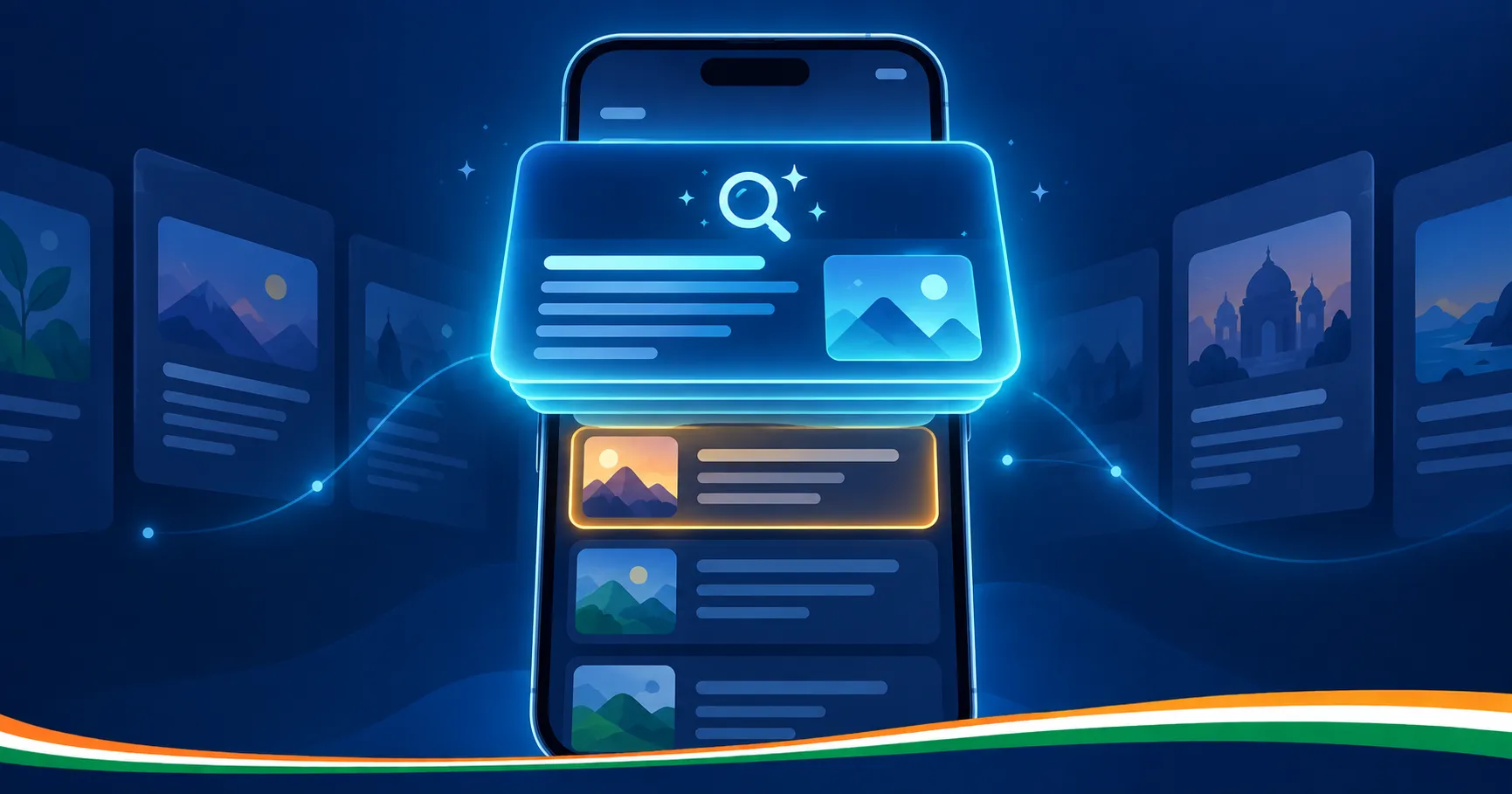
- Tapping "Dive deeper" opens a short AI-generated topic overview.
- The overview includes links to related stories, community reactions and original reporting.
- Google is testing it on videos first and says it will try multiple designs in the coming weeks.
- Search Engine Land reports the card can take a slot where a publisher's content might otherwise appear.
It is a test, not a full rollout, and Google hasn't said which countries are included. But Indian publishers should prepare now.
Why Publishers Are Worried
The concern is simple: if users get a summary inside Discover, fewer will click through to the original article. We've already seen this pattern in search, where AI summaries are linked to lower click-through rates (see our analysis of how AI Overviews are changing organic traffic in India).
The upside: Google says the overview features prominent links to original reporting. Publishers who are the original source, not the rewriter, have the best chance of being one of those links.
9 Google Discover Optimization Tactics That Still Work in 2026
- Use large, original, high-quality images. Google recommends images at least 1200px wide and enabling large previews with the max-image-preview:large robots setting. Avoid logos and stock images as the main image.
- Write honest, curiosity-driven titles. Capture the essence of the story. Google's Discover policies penalise misleading and exaggerated clickbait.
- Be the original source. Break news, publish original data, do first-hand testing. AI overviews tend to link to original reporting; aggregators get squeezed first.
- Publish fast on trending topics. Discover favours timely content. Watch Google Trends India, X trends and your own Search Console Discover report for emerging interest.
- Strengthen E-E-A-T. Clear bylines, author pages with credentials, an About page, editorial policy and contact details all build trust.
- Build topical authority. Discover learns what your site is known for. Cover a focused set of topics deeply rather than chasing everything.
- Create video and web stories. Google is testing "Dive deeper" on video first, which shows how much video matters in Discover. Web stories and short video give you more surfaces to appear on.
- Encourage follows and preferred sources. Ask loyal readers to follow your site in Discover and add you as a preferred source in Google, so you show up for them more often.
- Nail mobile experience. Fast pages, no intrusive pop-ups, clean ad layouts. Most Indian Discover users are on budget Android phones and patchy mobile data.
Want a step-by-step version? Work through our Google Discover checklist.
Content Formats That Still Win in Discover
| Format | Why it works | Risk from AI summaries |
|---|---|---|
| Breaking news and exclusives | Timely and original | Low if you are the source |
| Original data and research | Cited as source, hard to replicate | Low |
| Expert opinion and analysis | Unique perspective | Medium |
| Explainers and "what is" | Popular but easy to summarise | High |
| Aggregated news roundups | Easy to produce | Very high |
| Visual stories and video | Engaging, mobile-native | Medium |
How to Track the Impact
- Check the Discover report in Search Console weekly for clicks, impressions and CTR.
- Watch for rising impressions with falling CTR, which could signal summaries absorbing clicks.
- Compare performance of video vs article content, since the test starts with video.
- Track returning visitors and newsletter signups to build audience you own.
The Bigger Picture
Dive deeper is part of a wider shift: AI summaries in search, AI Mode, and now AI in feeds. Read Google AI Mode in India 2026 to see where search is heading, and our GEO strategy guide to learn how to get cited inside AI answers.
The Bottom Line
Discover isn't dead, but its rules are changing. Publishers who produce original reporting, strong visuals and trusted expertise are the ones AI overviews will link to. Start building direct audience relationships now so no single feed controls your traffic.