




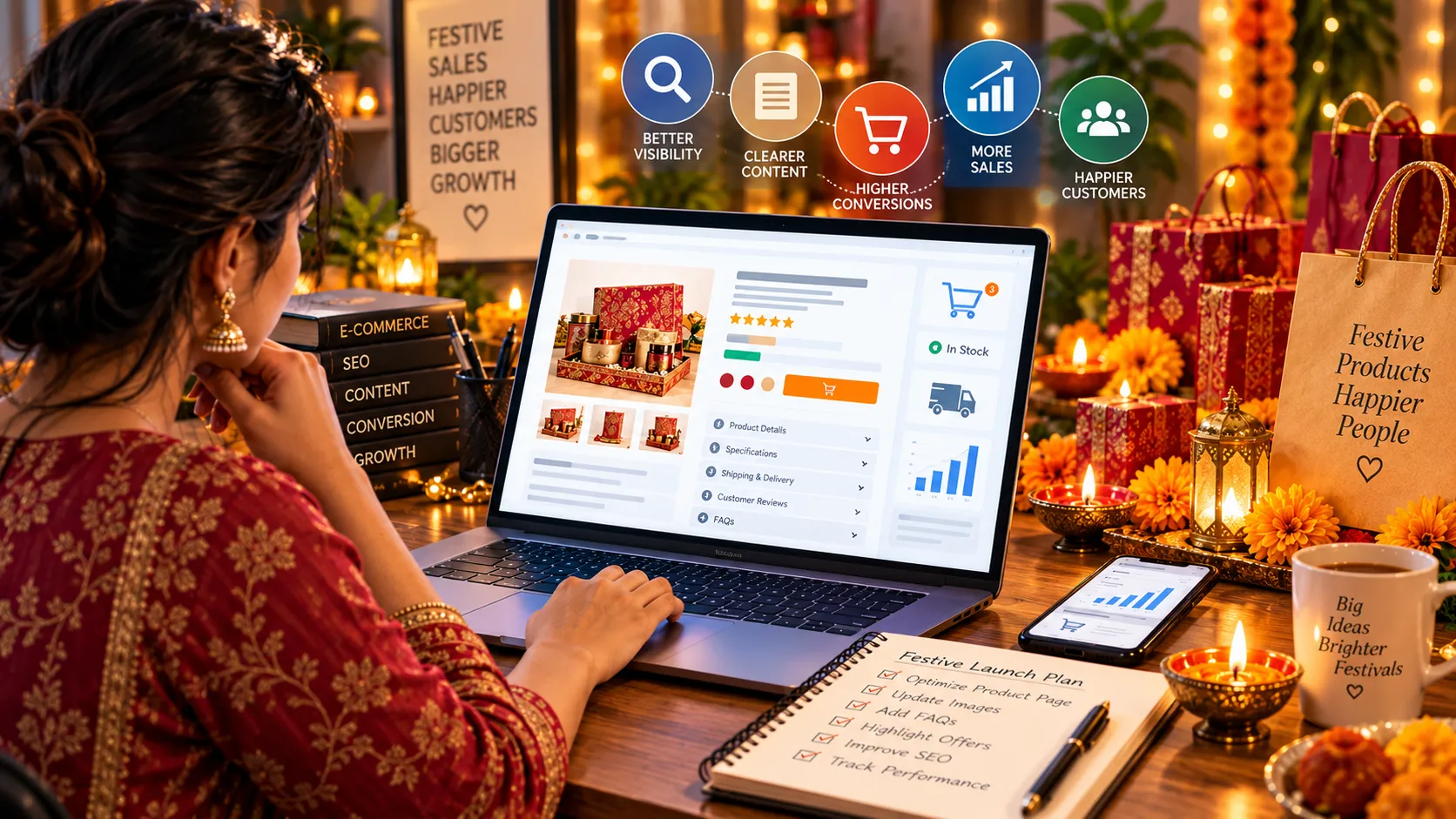
Most ecommerce brands in India treat product pages as static catalogues.
They upload photos, add a price, write a short description, and move on. Then they wonder why traffic rises during festive weeks but conversions and visibility stay average.
In 2026 that approach is especially costly.
Shoppers are researching earlier. AI systems are summarising product options. Google is showing richer shopping experiences. And the festive window is already open. If your product pages are thin, unclear, or slow to answer real questions, you lose twice — once in regular search and again in AI-generated results.
This is a practical guide to making product pages work harder during the current festive season.
Why Product Pages Need More Attention Right Now
Three shifts are happening at the same time:
1. People start researching weeks before they buy
The consideration phase for festive purchases begins well before Diwali. Pages that only become active in late October miss the early research traffic.
2. AI systems pull answers from clear, structured pages
When someone asks for gift ideas, comparisons, or “best options under a budget,” systems prefer pages that answer directly and contain useful detail.
3. Shopping features reward better information
Clean titles, accurate availability, strong images, and helpful descriptions improve how products appear across Google’s shopping-related surfaces.
Thin pages that worked in quieter months become a liability when intent rises.
What Strong Festive Product Pages Actually Contain
You do not need complicated redesigns. You need clearer information in the right places.
Start with a direct answer near the top
If the page is for a specific product or category, state what it is, who it is for, and the key benefit in the first few lines. Avoid vague marketing language.
Cover the questions people actually ask
Common festive questions include:
- Is this suitable as a gift?
- What is included in the box or package?
- How long does delivery take during festive weeks?
- Are there size, colour, or variant options?
- Is this appropriate for Navratri, Diwali, or both?
Answer these on the page instead of forcing people to dig through reviews or leave the site.
Use clear structure
Short paragraphs, useful headings, and simple bullet points help both readers and systems extract information. Long walls of text perform poorly.
Keep key details accurate and visible
Price, availability, variants, and delivery expectations should be easy to find. Outdated or hidden information damages trust quickly during high-intent periods.
Support the page with context
Link to relevant buying guides, festive calendars, or category pages. This helps users and strengthens topical relationships across your site.
How This Connects to the Rest of Your Festive Work
Your main festive timing page and early planning content should point to your strongest product and category pages. In return, product pages should link back to helpful guides.
This creates a clear path:
- Someone discovers a timing or idea article
- They move to a relevant category or product
- They find answers quickly and feel confident enough to act
The same logic applies to AI visibility. Clear product pages are more likely to be referenced when systems generate shopping-related answers.
Quick Improvements You Can Make This Week
1. Pick your top 10–20 festive products or categories
Focus only on what matters for the current season. Do not try to fix everything at once.
2. Strengthen the opening section
Add a clear, useful introduction that answers the main question a shopper has.
3. Add a short FAQ block
Three to five real questions with direct answers improve both user experience and extractability.
4. Check images and titles
Make sure titles are specific and images are high quality. These still influence how pages appear in different surfaces.
5. Link related content
Connect product pages to your festive calendar, buying guides, and any measurement or Discover-related articles where it feels natural.
What to Avoid
- Copying the same thin description across dozens of products
- Stuffing keywords into titles until they become unreadable
- Hiding important details behind tabs or long scrolls
- Publishing festive content that never points to actual products
- Waiting until the week of Diwali to make changes
Small, focused improvements on high-intent pages usually outperform large but shallow updates across the entire catalogue.
A Simple Measurement Approach
After you update pages, watch three things:
- Classic search performance for those URLs
- Any AI-related visibility signals available in Search Console
- On-site behaviour (time on page, add-to-cart, or enquiry rates)
You are looking for early signs that clearer information helps both discovery and decision-making.
Final Thought
Festive traffic is not guaranteed to convert.
The brands that turn seasonal interest into results are usually the ones whose product pages answer real questions quickly, look trustworthy, and fit into a wider content system instead of standing alone.
Navratri is close. The research phase is already underway.
The product pages you improve this week will still be working for you in November. The ones you ignore will simply remain invisible when it matters most.