




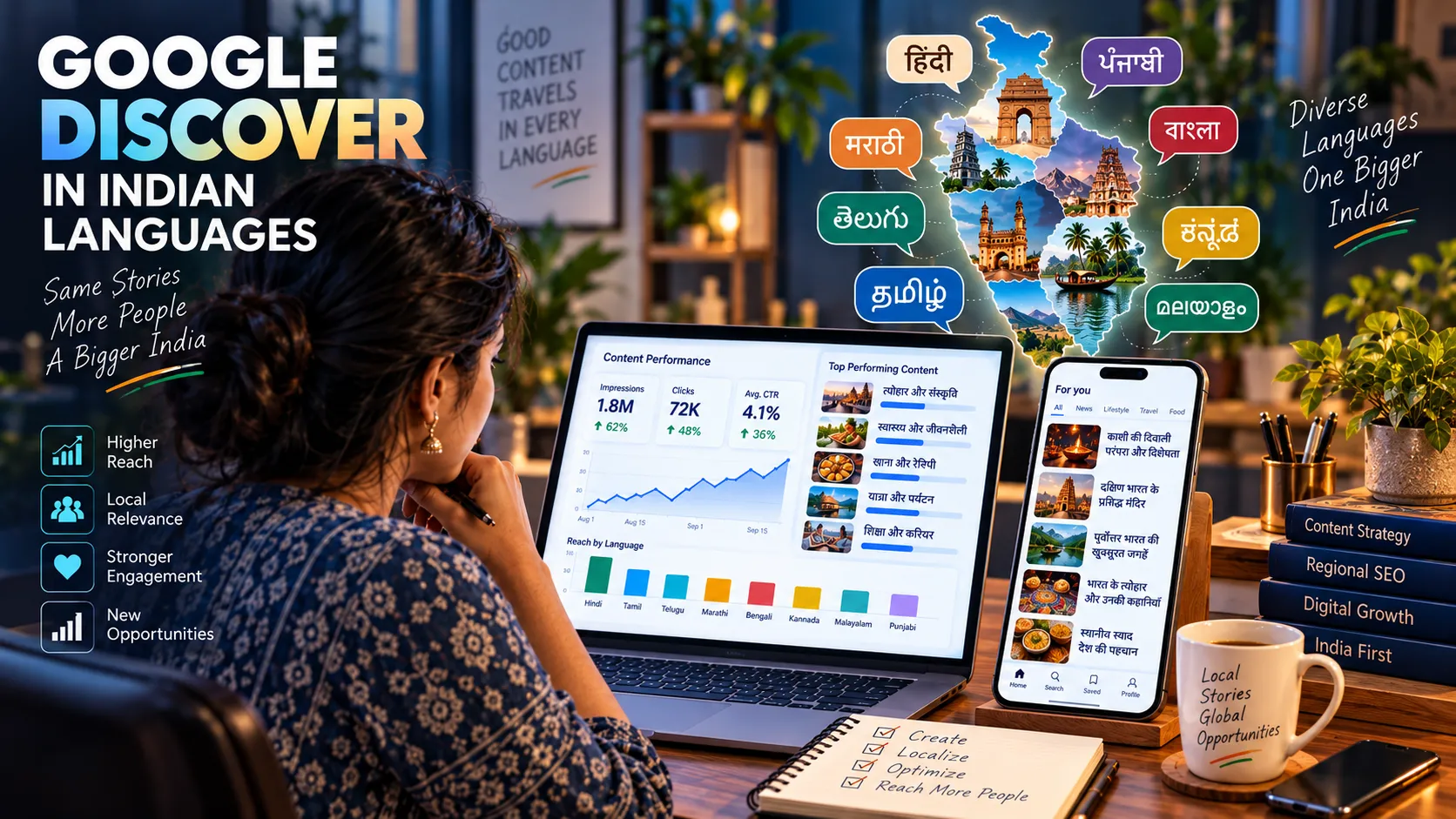
For a long time, Google Discover felt like an English-first, national-feed game.
If your content was in Hindi or a regional language, the data was harder to read, the feedback loop was weaker, and many teams simply treated Discover as a bonus rather than a core channel.
That is changing.Discover monitoring and related tools are now better equipped to handle major Indian languages. Publishers working in Tamil, Telugu, Marathi, Kannada, Punjabi, Bengali, Malayalam and other languages finally have clearer ways to see what is working. At the same time, Google has given readers more control over what they want to see and has made it easier for publishers to become “preferred” sources.
This is not a minor interface update. It is a practical opening for any brand or publisher that creates content for India’s linguistic diversity.
Why This Matters More Than It First Appears
India does not consume information in one language. Large audiences move between English, Hindi, and their primary regional language depending on the topic and the moment.When Discover becomes easier to measure and optimise in those languages, three things shift:
- Regional and bilingual publishers can finally treat Discover as a real traffic channel instead of a mystery.
- National brands that only publish in English leave an open lane for competitors who show up in the languages people actually prefer for certain topics.
- Timely content (festive, local, seasonal, how-to) has a better chance of travelling in the feeds that matter to each audience.
What Has Actually Improved
Without getting lost in product names, the useful changes are straightforward:- Better visibility into how stories perform in major Indian languages
- Clearer signals on which topics and formats gain traction with regional audiences
- New ways for readers to shape their own feed
- Easier paths for publishers to be followed or preferred by interested readers
Practical Steps You Can Take This Month
1. Audit your language coverage List every language you already publish in. Check whether those editions are live, indexable, and consistent in quality. Many sites have English and Hindi pages that are strong, while regional versions are thin or outdated.2. Treat each language edition as a real product Do not simply translate English headlines. Regional readers often respond to different angles, examples, and cultural references. A festive calendar piece, for example, should feel native to the language it appears in.
3. Strengthen the basics that Discover still rewardsClear titles, strong images, fast pages, and useful content remain essential. Language expansion does not remove the need for quality. It simply opens the channel to more audiences when the quality is there.
4. Make it easy for readers to stay connectedWhere Google offers follow or preferred-source options, use them cleanly. Do not force them. Simply make the path obvious for people who already like your work.
5. Connect Discover content to the rest of your strategyYour festive timing pages, AI visibility guides, and measurement articles should link naturally to language-specific versions where relevant. This helps both users and systems understand the relationship between your topics.
How This Fits With AI Search and Regular SEO
Discover and AI-generated answers are different surfaces, but they reward similar strengths:- Content that answers a real need quickly - Clear structure- Consistent topical focus- Genuine usefulness rather than thin rewrites A well-made festive guide or practical how-to in Hindi or a regional language can serve three purposes at once: it can appear in Discover feeds, it can rank in regular search, and it can become a source that AI systems reference.
That is why the work you do on early festive content and on clearer AI measurement supports this language opportunity instead of competing with it.
A Simple 10-Day Starting Plan
Days 1–2List your live language editions and note which ones are thin or neglected.
Days 3–5 Choose one high-potential topic (festive timing, a practical how-to, or a seasonal guide) and make sure strong versions exist in your most important languages.
Days 6–7Improve titles, images, and internal links on those pages. Submit them in Search Console.
Days 8–10Begin watching performance by language where the data is available. Note what gains early traction and expand from there.
You do not need a massive multilingual overhaul to begin. You need deliberate attention on the languages that already matter to your audience.
Final Thought
Most teams will notice the language improvements in Discover and then return to their English-first habits.The quieter opportunity belongs to the publishers and brands who treat Indian languages as first-class channels instead of afterthoughts.
The tools are becoming more capable. The audiences were already there. The only open question is whether your content shows up in the languages and feeds they actually use.