

How to Optimize Content for ChatGPT & Google AI Overviews (Step-by-Step)
Learn how to optimize your content for ChatGPT and Google AI Overviews with this simple step-by-step guide. Discover practical GEO strategies to improve content clarity, authority, structure, and visibility in AI-powered search results.
Read More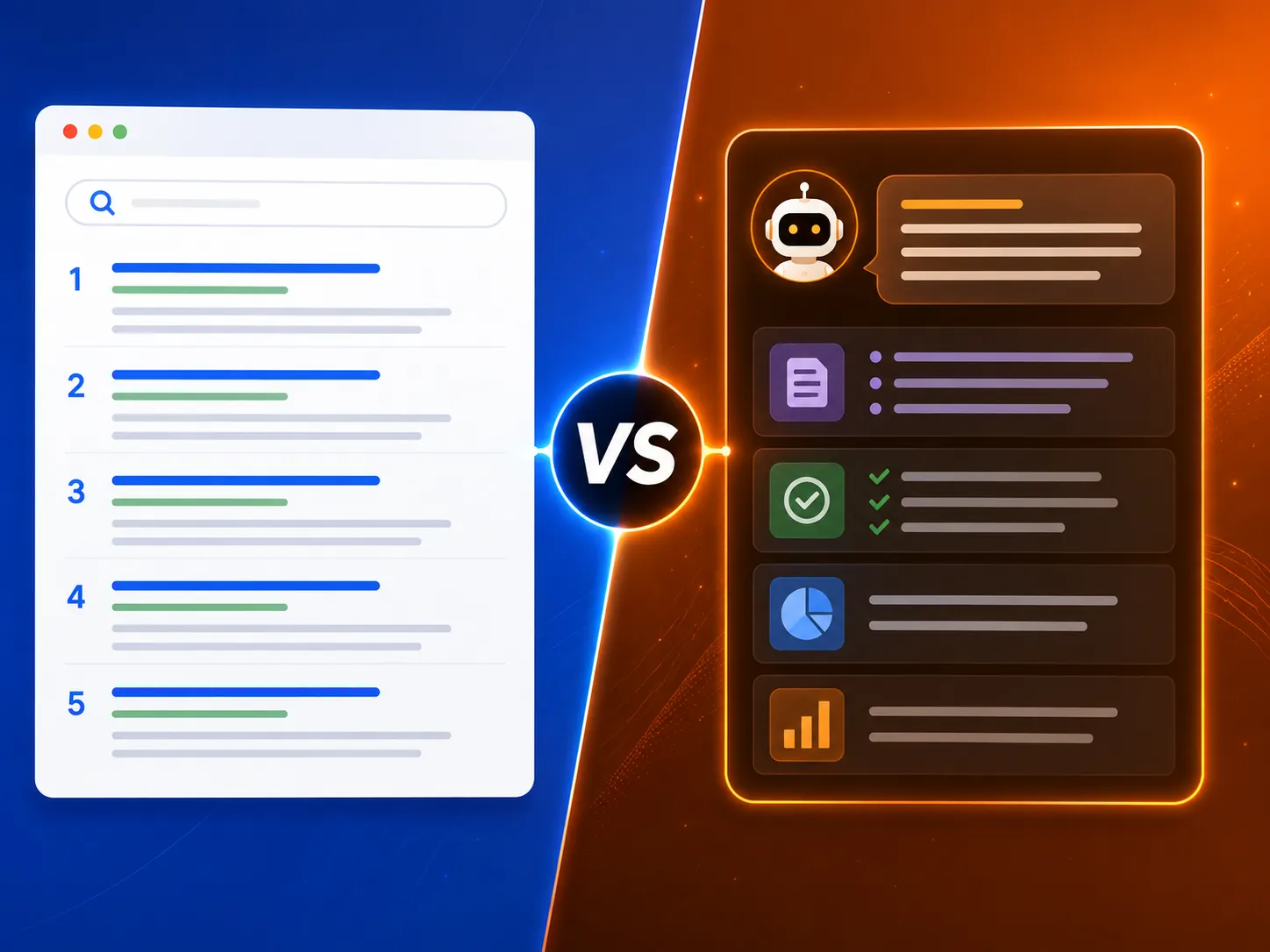
GEO vs SEO: 7 Key Differences Every Marketer Must Know
SEO focuses on improving website rankings in traditional search results, while GEO focuses on getting your content recognized and referenced by AI-powered search engines. This guide explains 7 key differences between GEO and SEO—from visibility and content strategy to user intent and performance measurement—so marketers can build a future-ready search strategy in 2026.
Read More
What Is GEO? The Complete Guide to Generative Engine Optimization in 2026
Generative Engine Optimization (GEO) helps your content get discovered, understood, and referenced by AI-powered search engines like ChatGPT, Google AI Overviews, Gemini, and Perplexity. In 2026, GEO is becoming a key part of modern SEO by focusing not just on rankings, but on visibility within AI-generated answers.
Read More
The Future of Keyword Research: What Comes After AI?
Keyword research is evolving beyond traditional tools and even today’s AI-powered platforms. The next generation of SEO may focus more on real-time search behavior, conversational queries, predictive insights, and deeper understanding of user intent. Explore what could come after AI in keyword research and how marketers can prepare for the future of search.
Read More
Free vs Paid Keyword Research Tools: Pros, Cons and When to Upgrade
Weigh the pros and cons of free vs paid keyword research tools: data accuracy, limits, AI features, cost and the point where upgrading to a paid tool pays off.
Read More
Common Mistakes in AI-Based Keyword Research (and Fixes)
AI can make keyword research faster, but relying on it without proper analysis can lead to irrelevant keywords, missed search intent, and unrealistic opportunities. This guide covers common mistakes in AI-based keyword research and practical ways to fix them. Learn how to combine AI insights with search data, competition analysis, and human judgment to build a more effective SEO keyword strategy.
Read More
Answer Engine Optimization (AEO): The New Keyword Research Frontier
Answer Engine Optimization (AEO) is changing how businesses approach keyword research by focusing on the questions users ask AI tools and search engines. Instead of targeting keywords alone, AEO identifies conversational queries, search intent, and question-based topics that can earn visibility in AI-generated answers, featured snippets, and voice search results. By combining traditional SEO with AEO-focused keyword research, brands can create content that directly answers what their audience wants to know.
Read More
How to Optimize Content for Google Discover Using AI Keywords
AI keywords can help you create content that aligns with what users are actively searching for and interested in. To optimize for Google Discover, focus on fresh, engaging topics, natural keyword placement, compelling headlines, and high-quality visuals. Use AI keyword research to uncover related queries, trending themes, and search intent—but prioritize helpful, original content over keyword stuffing.
Read More
AI Keyword Research for YouTube & Video SEO
AI-powered keyword research can help creators discover what audiences are searching for on YouTube and other video platforms. From identifying high-potential topics and long-tail keywords to understanding search intent and competition, AI tools make video SEO faster and more strategic. Learn how to use AI keyword research to optimize video titles, descriptions, tags, and content for greater visibility and reach.
Read More
See How AI Search Describes Your Brand Today
We run your domain through the same visibility checks we use on client accounts — AI answer coverage, technical SEO and content gaps — and send you the findings. No obligation.