




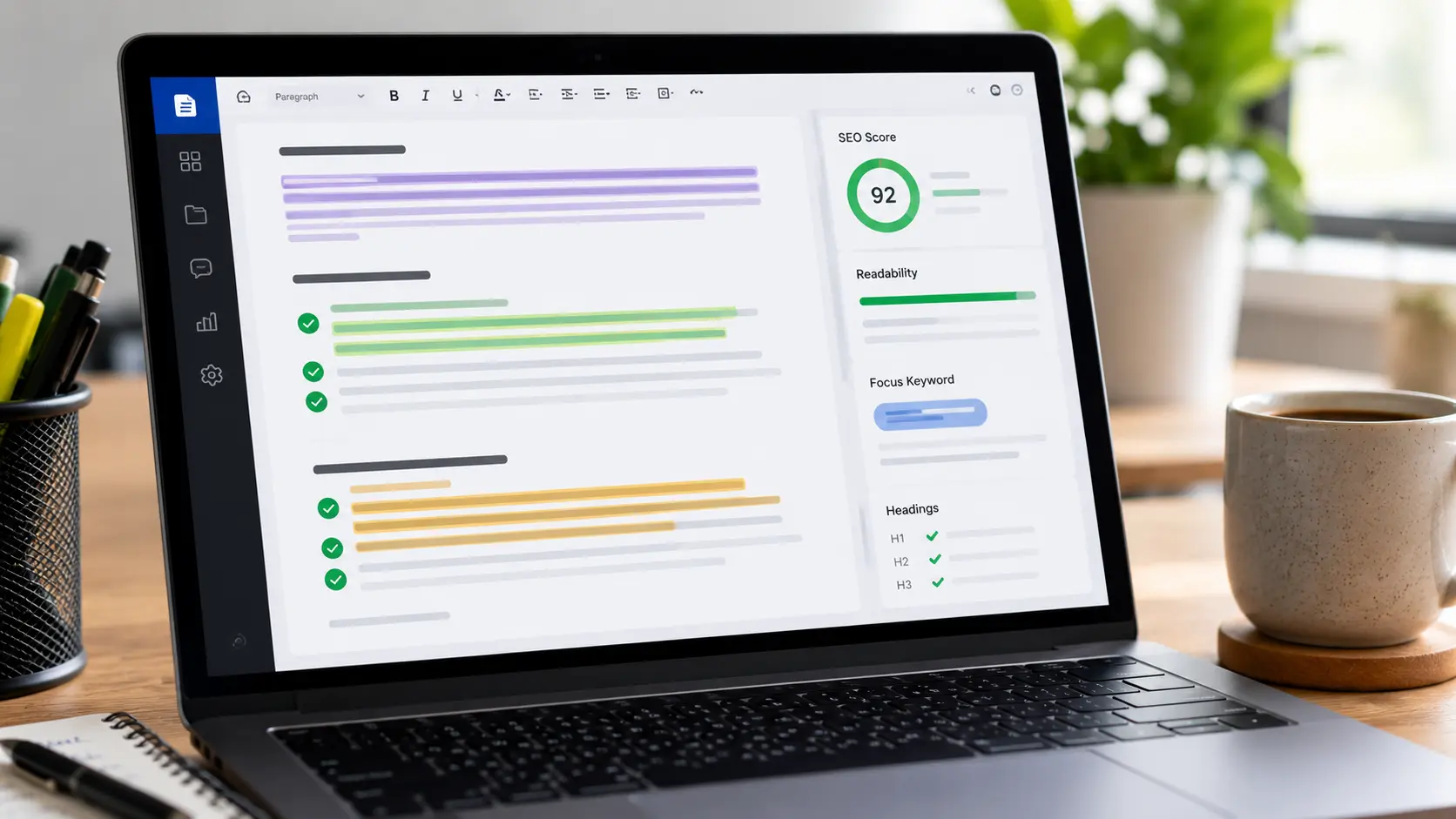
On-page SEO checker tools help you identify common optimization issues before publishing a page. They can check titles, headings, meta descriptions, images, links, and other important SEO elements in just a few minutes.
What Do On-Page SEO Checkers Analyze?
Most tools look at important on-page factors such as:
- Title tags and meta descriptions
- H1, H2, and other headings
- Keyword usage
- Internal and external links
- Image alt text
- Canonical tags
- URL structure
- Content readability
These checks help you catch basic SEO issues before they affect your page's performance.
Free Browser-Based On-Page Checkers
Browser extensions are useful when you want to inspect a live webpage without copying its URL into another tool.
- SEO Meta in 1 Click — Quickly inspect titles, meta descriptions, headings, links, images, and other page elements.
- Detailed SEO Extension — Provides a detailed overview of important on-page SEO elements.
- SEO Minion — Useful for checking links, headings, hreflang, and other SEO elements.
Free Website On-Page SEO Checkers
For a broader analysis, try these tools:
- Seobility SEO Checker — Analyze individual pages and identify common SEO issues.
- SEO Site Checkup — Check on-page SEO, technical factors, speed, and other website signals.
- Ahrefs Free SEO Tools — Provides several free tools for analyzing keywords, backlinks, and website SEO.
Free CMS Plugin-Based Checkers
If you're using WordPress, SEO plugins can provide optimization suggestions directly inside the content editor.
Yoast SEO and Rank Math offer free WordPress plugins with features for optimizing titles, meta descriptions, headings, readability, internal links, and other on-page elements.
Readability Matters Too
SEO isn't only about keywords. Content should be easy to understand, well-structured, and useful to the reader.
Tools such as Hemingway Editor can help identify overly complex sentences, passive voice, and readability issues.
On-Page SEO Checklist Before You Publish
- Search intent: the page format (guide, list, tool, service page) matches what already ranks. See our guide to search intent mapping.
- Title and meta description: unique, keyword near the start, written to earn the click. Check them with free meta tag checker tools.
- One clear H1 and a logical H2/H3 outline. Learn more about header tags and semantic structure.
- Topic coverage: the page answers related questions and entities, not just one keyword. This is the core of semantic SEO.
- Internal links: at least 2–3 links to and from related pages, with descriptive anchor text.
- Images: compressed, with descriptive file names and alt text.
- Canonical tag: points to the correct URL. See canonical tags explained.
- Schema markup: Article, FAQ, Product or LocalBusiness where relevant. See our structured data guide.
- No overlap: no other page on your site targets the same keyword, which can cause keyword cannibalization.
How to Fix the Most Common On-Page Issues
| Issue flagged | Quick fix |
|---|---|
| Missing or duplicate title | Write a unique 50–60 character title for each page |
| Multiple or missing H1 | Keep exactly one H1 that matches the topic of the page |
| Thin content | Expand with steps, examples, FAQs and data, or merge with a stronger page |
| Images without alt text | Add short descriptions of what the image shows |
| Few internal links | Link from related posts and add a related guides section |
| Slow page | Compress images, defer unused scripts and test again in PageSpeed Insights |
For a site-wide view instead of page-by-page checks, run a full audit with free SEO audit tools.
What On-Page Tools Can't Tell You
SEO checkers are useful for technical and basic content recommendations, but they cannot fully determine whether your article genuinely satisfies search intent.
A page can receive a high SEO score and still provide little value.
Always review your content for accuracy, originality, usefulness, search intent, and overall reader experience.
Conclusion
Free on-page SEO checker tools are excellent for catching optimization issues before publishing. Use Seobility, SEO Site Checkup, Ahrefs, Yoast SEO, Rank Math, and useful Chrome extensions as a pre-publish checklist—but let human judgment guide the final content quality.