




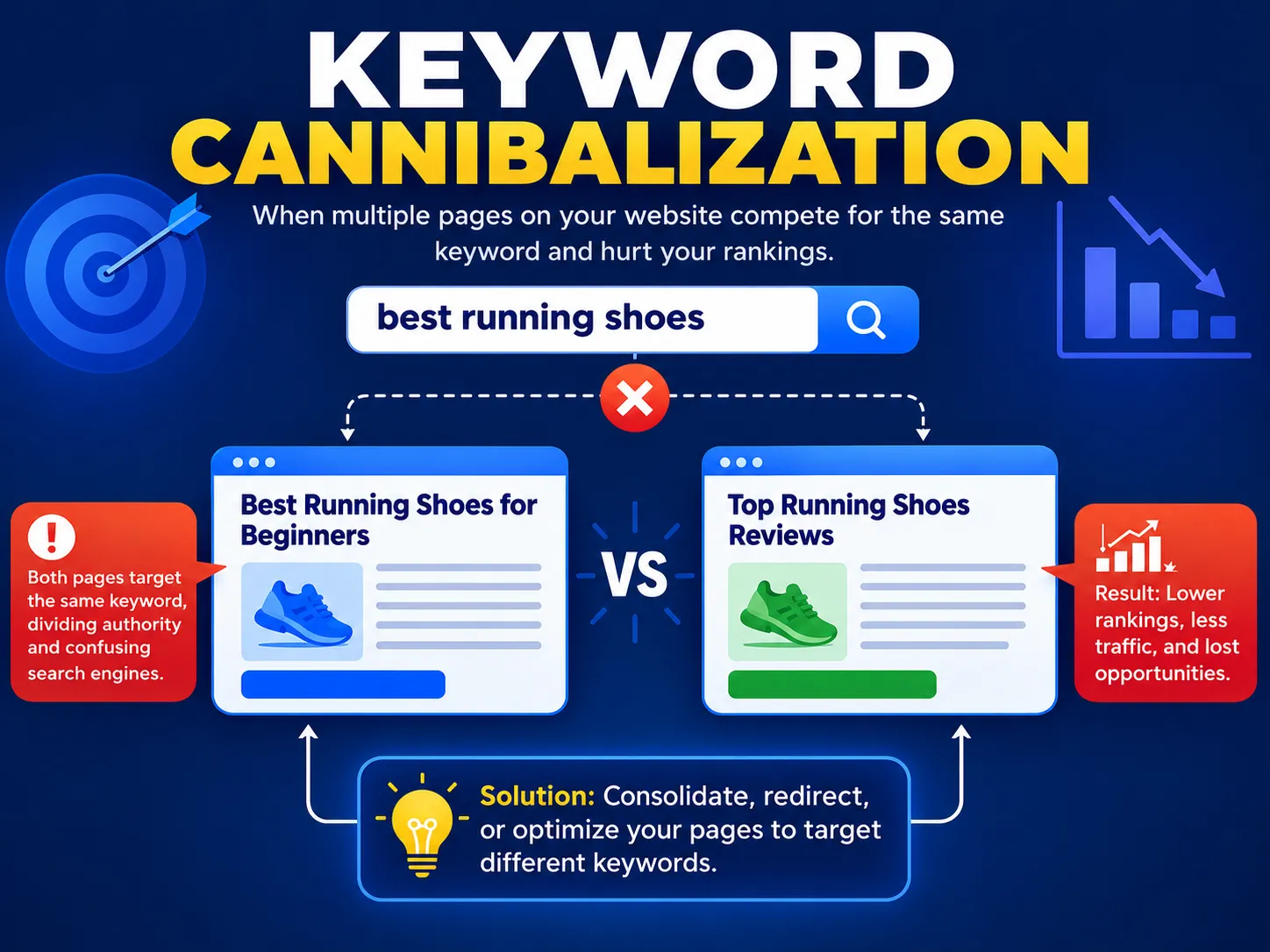
Keyword cannibalization occurs when multiple pages on your website target the same or very similar keywords and search intent.
For example, you might have separate articles targeting:
- Best SEO Tools
- Top SEO Tools
- SEO Tools for Businesses
If all three pages answer essentially the same question, they may compete for visibility.
However, ranking multiple pages for related keywords isn't automatically a problem. The key question is whether the pages have different purposes and search intents.
Why Is Keyword Cannibalization a Problem?
When several pages target the same intent, search engines may have difficulty determining which URL is the strongest result.
This can lead to:
- Rankings switching between URLs
- Lower organic traffic
- Weaker backlinks being spread across pages
- Poor internal linking signals
- Multiple pages competing for the same audience
The solution isn't always to delete content. First, understand why the pages overlap.
How to Find Keyword Cannibalization
1. Use Google Search Console
Check the Performance report and identify queries where multiple URLs receive impressions or clicks.
If several pages consistently appear for an important query, investigate whether they have overlapping intent.
2. Compare Your Pages
Review pages targeting similar keywords and compare:
- Main topic
- Search intent
- Target audience
- Content purpose
- Primary keyword
If the pages provide nearly identical answers, you may have a cannibalization issue.
3. Use Rank Tracking Tools
SEO tools can show which URLs rank for the same keywords over time.
Frequent URL changes for the same query can be a useful signal that your content needs restructuring.
How to Fix Keyword Cannibalization
Merge Similar Pages
If two pages serve the same purpose, combine the best information into one stronger resource. Redirect the weaker page when appropriate.
Separate Search Intent
If both pages are useful, give them clearly different purposes.
For example:
Best SEO Tools for Beginners
and
Enterprise SEO Platforms for Large Websites
Improve Internal Links
Link related pages strategically and make it clear which page is the primary resource for a topic.
Review Canonical Tags
Canonical tags can help with substantially similar or duplicate versions of content. They are not a substitute for differentiating pages that genuinely target different search intents.
Read also : Internal Linking Strategy: How to Build Links That Boost Rankings
Final Takeaway
Keyword cannibalization isn't simply about using the same keyword on multiple pages. The bigger issue is unnecessary overlap in search intent.
Regularly audit similar pages, clarify their purposes, and consolidate content when needed. A cleaner content structure can make it easier for search engines and users to understand your website.