




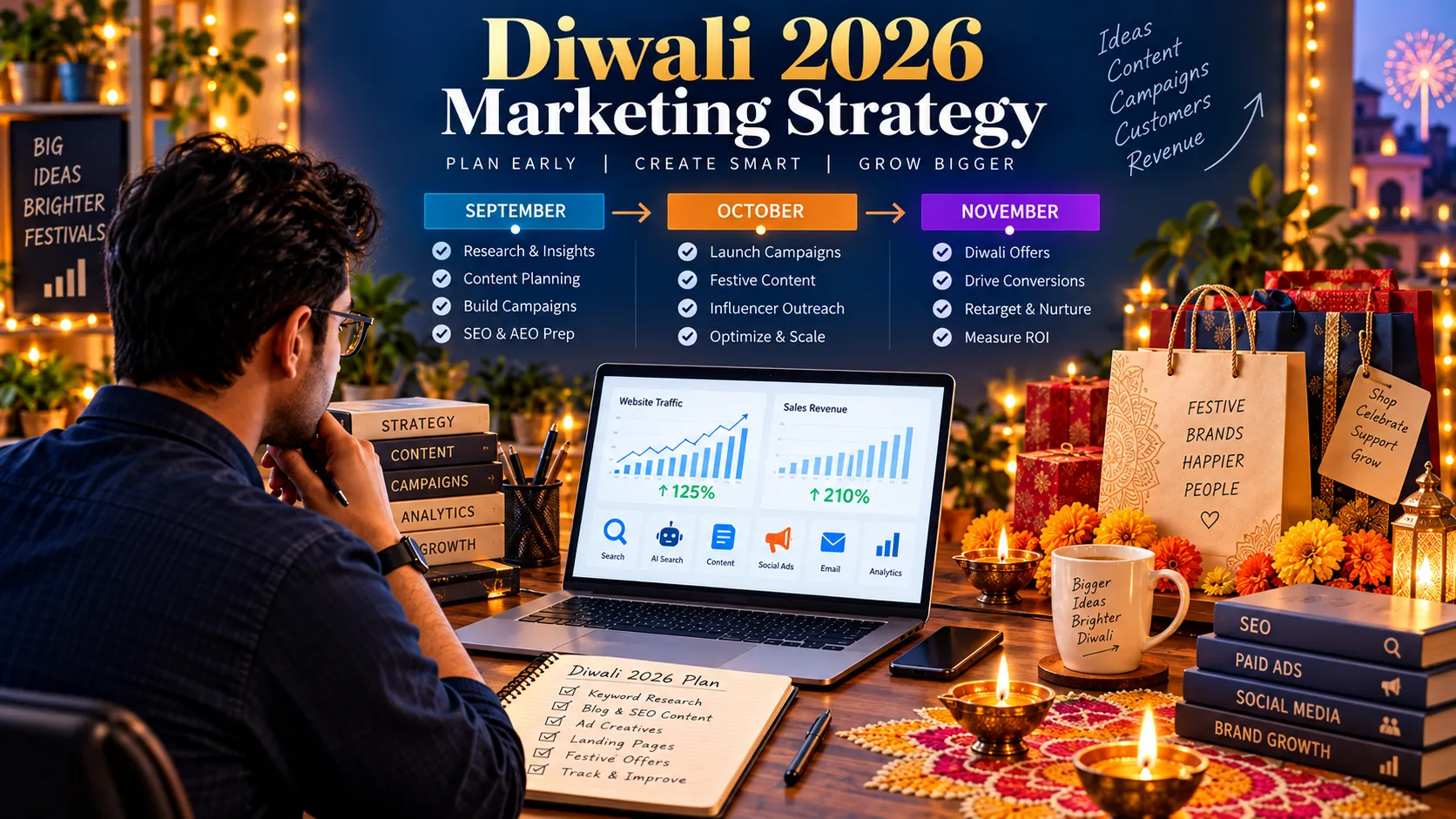
Most Indian brands still plan festive marketing like it’s a single event.
They wait for October, open the ad accounts, and then compete for the same expensive attention. By the time Diwali arrives, the cost is high and the differentiation is low.
That’s the old way of thinking.
In 2026, the brands that win are the ones who treat the festive season as a long runway, not a single day. Purchase intent doesn’t suddenly appear on Diwali morning. It builds quietly over weeks. The content and visibility you create now decide how much of that intent you capture later.
Why “Diwali Day” Thinking Is Costing You
People don’t wake up on 8 November and start researching gifts, home upgrades, or service offers for the first time. They begin exploring options much earlier — comparing, saving links, asking questions, and forming preferences.
When your content only appears late, two things happen:
- You miss the early research phase where people are still open to new options.
- You enter the market when competition and ad costs are already at their peak.
Early visibility is quieter, cheaper, and often more effective. It also gives your pages time to get indexed, earn relevance, and become eligible for both regular search results and AI-generated answers.
The 2026 Festive Timeline You Should Actually Work With
Here’s a practical view of the season:
- Mid-to-late September → Early consideration and research begins
- 9–17 October → Navratri window (strong cultural and shopping energy)
- 19 October → Dussehra
- 6 November → Dhanteras
- 8 November → Diwali
- Mid-November → Continued demand, especially for bigger purchases and services
Treat this entire stretch as one connected campaign. Content published in the next two weeks can still influence decisions that happen in October and November.
What to Publish Right Now (Not in October)
1. One clear festive calendar page
Make this your main hub. List the key dates, explain what each phase means for different types of businesses, and show when content and campaigns should go live. This page becomes the internal link magnet for everything else you publish.
2. Early-question content
People are already searching for timing and planning answers. Useful angles include:
- When brands should start festive marketing in 2026
- What to prepare before ad costs rise
- Simple calendars for different categories (gifting, home, services, D2C)
3. Direct, answer-first writing
AI systems and Google’s generative results prefer pages that answer the main question quickly. Start important sections with a clear 60–80 word response, then expand. This improves your chances of being cited in AI Overviews and similar experiences.
4. Supporting pieces that strengthen the cluster
Link your festive content to related guides on:
- How to optimise for Google Discover
- Answer Engine Optimisation and getting cited in AI results
- Festive-focused ecommerce and product page improvements
- Using Google Search Console’s newer AI performance data to measure impact
These connections help both readers and search systems understand that your site has real depth on the topic.
Writing Style That Works for Discover and AI
Keep the language natural and useful. Short paragraphs. Clear subheadings. Practical takeaways instead of vague advice.
For Google Discover:
- Titles that create curiosity perform better than pure keyword titles
- A clean, relevant image helps
- Timely angles (what to do this month, not generic evergreen tips) travel further
For AI search:
- Answer the core question early
- Use straightforward language
- Structure content so key points are easy to extract
A Simple 7-Day Plan You Can Follow
Day 1–2
Publish the main festive timing and calendar page.
Day 3–4
Add two supporting articles that answer early planning questions.
Day 5
Strengthen internal links between the new pages and your existing SEO, Discover, and AI-related content.
Day 6–7
Review titles and images, submit the new URLs in Search Console, and start watching both regular performance and AI-related signals.
Final Note
Waiting for Diwali to “start” festive marketing is one of the most expensive habits Indian brands still carry.
The brands that treat the next eight weeks as the real campaign window will show up earlier in search, in AI answers, and in Discover feeds — often at lower cost and with less noise.
The calendar has already moved. The only decision left is whether your content moves with it.