




Keyword research can quickly turn into a spreadsheet full of hundreds—or thousands—of similar search terms. The difficult part isn't finding keywords anymore. It's deciding which keywords deserve their own page and which should be targeted together.
That's where AI keyword clustering helps.
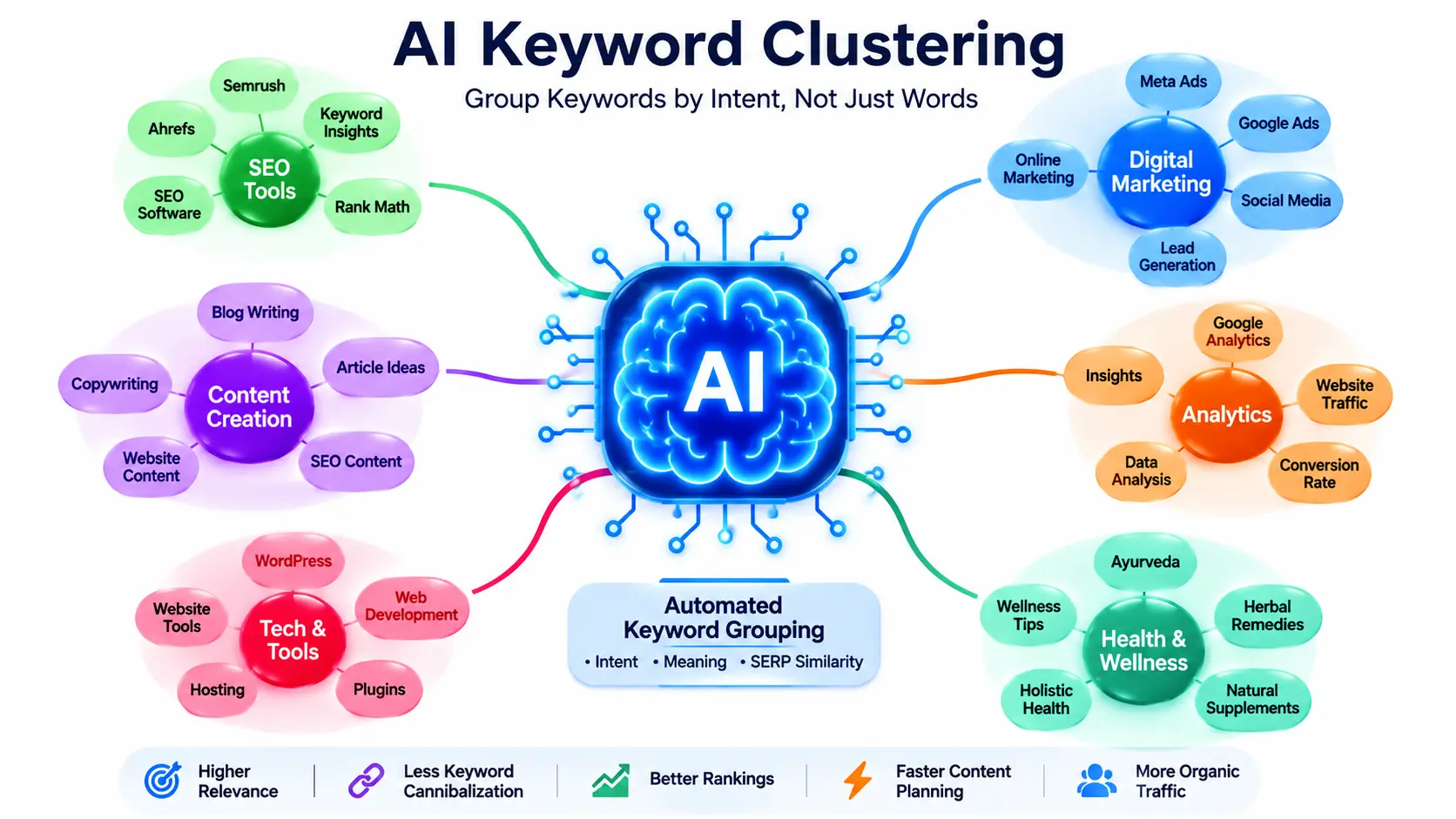
AI-powered clustering groups keywords based on their underlying topic, search intent, semantic relationships, or SERP overlap rather than simply matching words. For example, “shoes for flat feet” and “overpronation footwear” use different wording but can represent closely related search intent.
A useful test to apply: Could one page genuinely satisfy the search intent behind every keyword in this group?
If yes, keep the cluster together. If the answer feels like a stretch, split it.
Use automation to organize the data, then apply human review to validate user intent. The goal isn't to build the largest possible clusters, but to create logical groups where one high-quality page satisfies the searcher.
Done properly, automated keyword grouping delivers a cleaner content roadmap, eliminates self-competing pages, and establishes a scalable foundation for long-term organic growth.
Read More : Local SEO Keyword Research with AI Tools
That's where AI keyword clustering helps.
AI-powered clustering groups keywords based on their underlying topic, search intent, semantic relationships, or SERP overlap rather than simply matching words. For example, “shoes for flat feet” and “overpronation footwear” use different wording but can represent closely related search intent.
How AI Keyword Clustering Works
A typical workflow is straightforward:- Export your complete keyword list from your SEO or keyword research tool.
- Import the list into an automated clustering tool.
- Group keywords based on intent, semantic similarity, or SERP overlap.
- Review the clusters manually.
- Assign one primary target page to each finalized cluster.
A useful test to apply: Could one page genuinely satisfy the search intent behind every keyword in this group?
If yes, keep the cluster together. If the answer feels like a stretch, split it.
Why Keyword Clustering Matters for SEO
Good clustering solves several structural SEO problems simultaneously:* Reduces Keyword Cannibalization: Instead of building multiple competing pages targeting near-identical queries, consolidate them into a single, high-authority resource.Exposes Content Gaps: If a distinct search intent appears in your data without a matching URL on your site, you've pinpointed a clear content opportunity.Streamlines Site Architecture: Keyword clustering operates at the page level (which queries belong together), creating the building blocks for topic clustering at the site level (how pages interlink around broader themes).Top Tools for Automated Keyword Clustering
- Keyword Insights: Purpose-built for keyword clustering and intent grouping. Ideal for turning raw search query exports directly into structured content roadmaps.
- Semrush Keyword Strategy Builder: Leverages live SERP-based signals to identify which queries realistically share search result pages and belong on the same target URL.
- Ahrefs Keywords Explorer: Uses its "Parent Topic" metric based on ranking-page relationships to help determine if a sub-query can be targeted with an existing primary page.
Final Thoughts
AI keyword clustering doesn't replace SEO judgment—it makes the first pass dramatically faster.Use automation to organize the data, then apply human review to validate user intent. The goal isn't to build the largest possible clusters, but to create logical groups where one high-quality page satisfies the searcher.
Done properly, automated keyword grouping delivers a cleaner content roadmap, eliminates self-competing pages, and establishes a scalable foundation for long-term organic growth.
Read More : Local SEO Keyword Research with AI Tools
Need a hand with this? Our SEO services team can help you put it into practice. Talk to ClicZeo.