




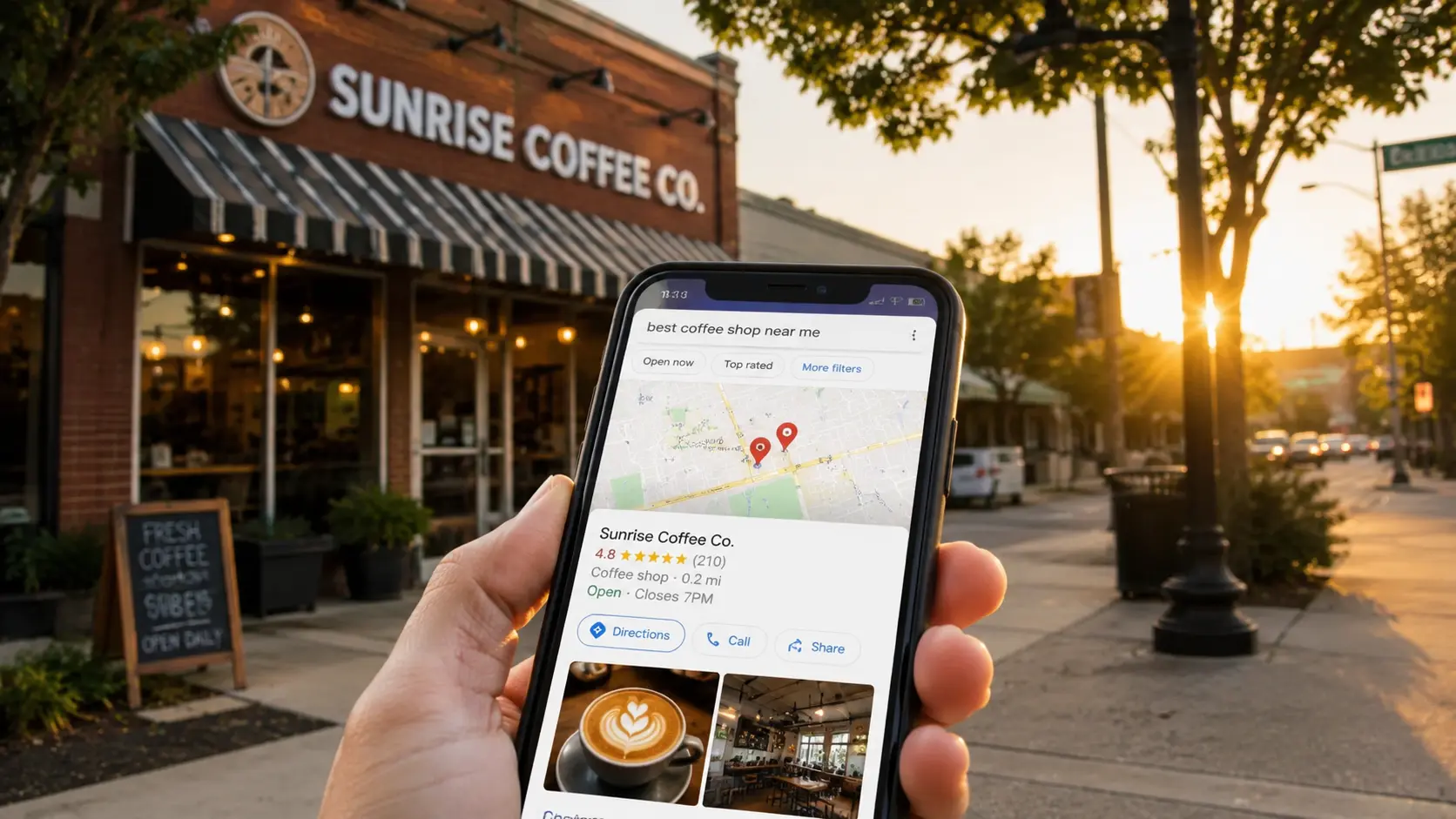
Local SEO is changing quickly. Customers aren't searching only for broad terms like “digital marketing agency Delhi.” They also use searches such as “digital marketing agency near me,” “SEO agency in Noida,” or conversational questions about specific services.
AI can make local keyword research faster by discovering variations that traditional keyword tools may not immediately surface.
Related reads: Voice Search & AI: New Keyword Research Rules
How AI Helps With Local Keyword Research
Start with your main service and location. Ask AI to generate keyword variations using:
- City and neighborhood names
- “Near me” searches
- Local landmarks
- Service + location combinations
- Problem-based searches
- Conversational questions
- “Best,” “affordable,” and “nearby” modifiers
For example, a dentist could research “dentist near me,” “dentist in South Delhi,” “emergency dentist near Saket,” and “best dentist near Select Citywalk.”
However, don't treat AI-generated keywords as confirmed search data. Validate important keywords using search results and SEO tools.
Best AI & Local SEO Tools
- ChatGPT — Generate local keyword ideas, search-intent variations, FAQs, and content topics. ChatGPT
- Semrush — Research keywords, competitors, local rankings, and local SEO opportunities. Semrush
- Ahrefs — Find keyword ideas, long-tail opportunities, search demand, and keyword difficulty. Ahrefs
- BrightLocal — Track local rankings, citations, reviews, and local search performance. BrightLocal
- Google Business Profile — Manage your business presence across Google Search and Maps. Google Business Profile
Don't Forget Your Google Business Profile
Local SEO isn't only about website keywords.
Your Google Business Profile, website, reviews, business category, services, location, and opening hours all contribute to your local presence.
Keep your business information consistent across your website and Business Profile. Strong local SEO works best when these assets support the same business information and search intent.
Read Also : E-commerce Keyword Research Powered by AI
Create Better Location Pages
Multi-location businesses can benefit from location-specific landing pages, but avoid creating dozens of pages where only the city name changes.
Every location page should contain something genuinely useful, such as:
- Local service information
- Neighborhood-specific details
- Local FAQs
- Customer examples or case studies
- Service coverage information
- Directions or nearby landmarks
Don't create pages for locations. Create pages for local customers.
A Simple AI Local SEO Workflow
1. Start with your main service.
2. Add cities, neighborhoods, and local modifiers.
3. Use AI to generate search variations and questions.
4. Validate keywords with Semrush, Ahrefs, Google Search, or other SEO tools.
5. Optimize your website and Google Business Profile.
6. Track rankings, calls, website visits, and leads.