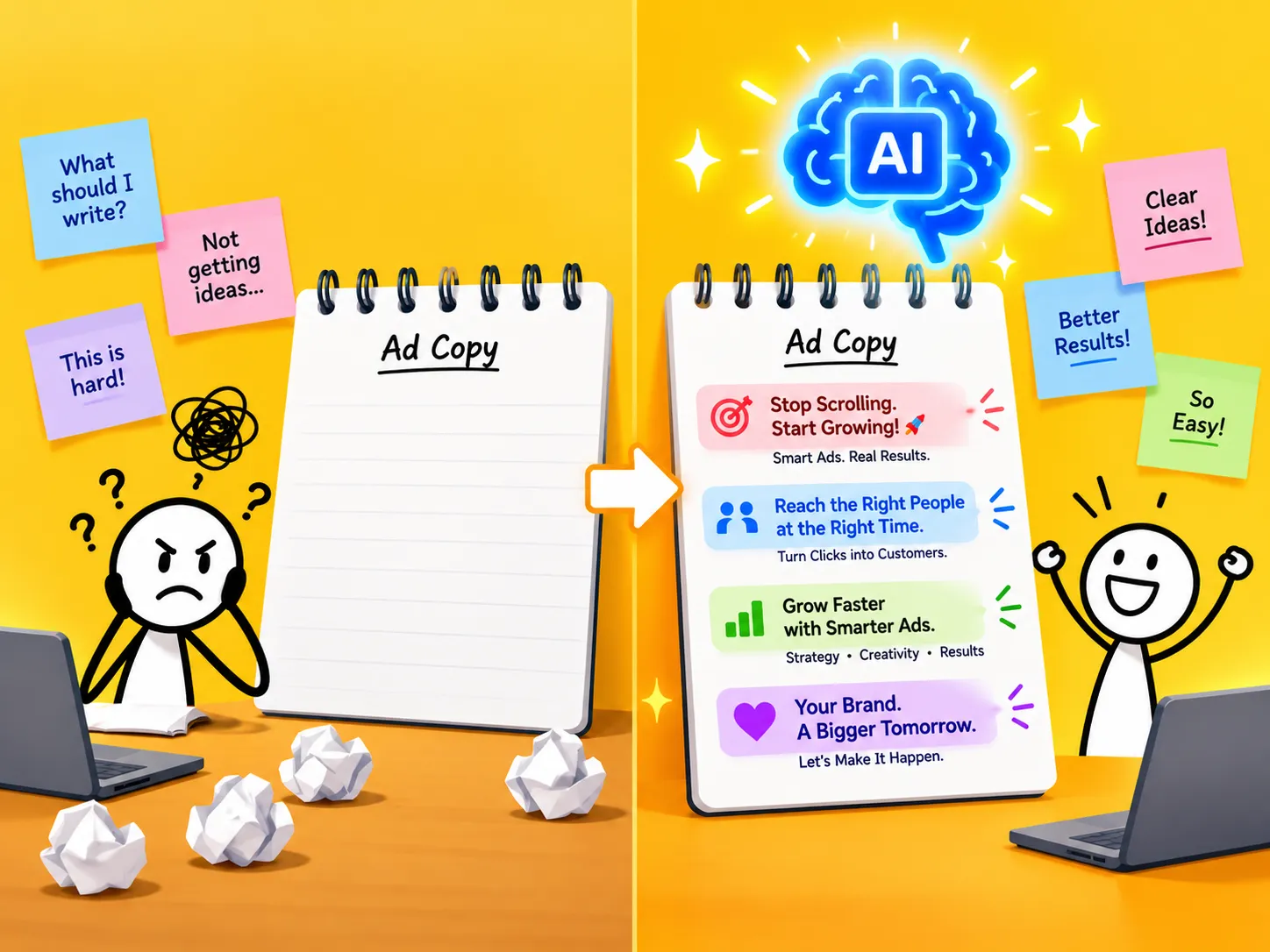
Writing Facebook and Instagram ad copy takes time. Every campaign needs multiple hooks, headlines, primary text variations, and calls to action, and each one has to speak to a specific audience. A Facebook ad copy generator can shorten the time it takes to produce a first draft and help you explore angles you may not have considered. The catch is that AI output is only as good as the brief behind it, and the first version is rarely the one to publish.
This guide compares the leading AI writing tools for Meta ads, explains what to look for, and shows you how to get copy that feels specific and persuasive. If you are also building the funnel behind your ads, our guide to email marketing for lead generation covers what happens after the click.
What a Good Facebook Ad Copy Generator Should Do
Not every AI writer is built for paid social. A useful tool for Meta ads should produce short, punchy text that fits placement limits, generate several distinct angles in one session, and adapt tone for different audiences. Brand voice controls, reusable templates, and easy ways to create variations matter more than long-form writing features.
It also helps to think about the full ad, not just the caption. Your primary text, headline, and call to action need to work together, and all three must match the offer on your landing page. A tool that helps you test those combinations quickly is more valuable than one that produces the longest text.
Best Facebook Ad Copy Generator Tools
1. Copy.ai
Copy.ai is an AI marketing platform that can generate headlines, hooks, product messaging, and calls to action. It is useful when you need many variations quickly, especially for teams producing copy across several campaigns.
Best for: bulk copy creation and marketing workflows.
2. Jasper
Jasper focuses on brand consistency. Its brand voice and knowledge features help teams keep ad copy close to established messaging, which matters when several people write for the same account.
Best for: brands and teams that need consistent messaging.
3. ChatGPT
ChatGPT is one of the most flexible options for brainstorming and refining Meta ads. Share your product, audience, offer, tone, and customer objections, then ask for variations. A practical prompt is to request five different hooks, with primary text and a CTA for each angle.
Best for: flexible copywriting, brainstorming, and iteration.
4. Anyword
Anyword is built around performance-oriented marketing content. It generates messaging variations and helps you evaluate which options are likely to perform better, which suits teams that want data to guide copy decisions.
Best for: performance-focused marketing teams.
5. Writesonic
Writesonic offers AI tools for advertising and marketing content. It is especially useful when your campaign needs both ad messaging and supporting landing-page copy, so the ad and the page stay aligned.
Best for: ad and landing-page copy workflows.
How to Get Better AI Ad Copy
The quality of the output depends heavily on the information you provide. Before you prompt any tool, prepare a short brief that covers:
- Product: what you are selling and what makes it different.
- Audience: who the ideal customer is and what they care about.
- Benefit: the specific problem the product solves.
- Offer: what makes the deal attractive, such as a trial, a discount, or a free audit.
- Tone: professional, conversational, urgent, or educational.
- Objections: why someone might hesitate to buy.
Ask for three to five genuinely different messaging angles rather than dozens of minor rewrites. One angle might focus on saving time, another on cost, and another on removing risk. Different angles give you meaningful options to test, while small rewrites often perform almost the same.
A Sample Prompt You Can Adapt
Here is a simple structure you can reuse. Replace the bracketed details with your own information.
Act as a direct-response copywriter for Meta ads. My product is [product]. My ideal customer is [audience]. The main benefit is [benefit]. The offer is [offer]. Their biggest objection is [objection]. Write five ad options, each with a different angle. For each option, provide a hook under 125 characters, a headline, primary text under 80 words, and one call to action. Avoid unverifiable claims and exaggerated guarantees.
This prompt gives the tool enough context to write distinct options rather than generic filler. Run it once, then ask follow-up questions, such as which angle suits a cold audience versus people who already visited your site.
Common Mistakes to Avoid
The biggest mistake is publishing AI-generated copy without editing it. Generic phrases such as "transform your business today" make ads sound like everyone else's. Add real customer language, specific product details, and proof points you can verify.
Another common error is promising something the landing page does not deliver. Make sure the copy matches the actual offer, pricing, and page experience. Check every claim, statistic, price, and guarantee before launch, and review your ads against Meta's advertising standards so they are not rejected or restricted. You can also browse competitor creative in the Meta Ad Library to see which angles are already crowded.
How to Test AI-Written Ads Properly
Once you have a shortlist, test it in a structured way. Keep the audience, budget, and placement the same across variations, and change only the copy so you know what caused any difference in results. Run each test long enough to gather meaningful data before choosing a winner. Retire weak hooks quickly, and reuse the strongest angles in new formats such as carousels, short videos, or static images.
Measure What the Copy Achieves
Once your ads are live, judge copy by results: click-through rate, cost per lead, and conversion rate. Strong hooks should lift engagement, but the real test is whether those clicks turn into qualified leads. Our guide to high-ROI digital marketing explains how to measure and improve results across channels.
Final Takeaway
AI ad copy generators work best as creative assistants, not autopilot. Use them to overcome the blank page, explore messaging angles, and produce variations faster, then let human judgment decide which copy fits your audience, brand, offer, and goal. For a broader view of how AI is changing marketing workflows, read our overview of AI agents for marketing, which covers what these tools can and cannot do.