




If you've ever read an article that said “SEO is dead” or “PPC is a waste,” close the tab. Both are wrong, and both are usually written by someone selling one of them.
The truth is simpler. SEO and PPC marketing solve different problems. One builds visibility you own. The other buys visibility you control. And when you plan them together, they start doing something neither can do alone.
What SEO and PPC Marketing Actually Means
Search marketing has two sides:
• SEO (Search Engine Optimization): earning organic rankings through quality content, a technically healthy site, and trustworthy links.
• PPC (Pay-Per-Click): paying for ad placements on search engines and other platforms, with cost only when someone clicks.
Together they're often grouped as search engine marketing, and the idea is to appear wherever your customer is looking, whether that's the ad area or the organic results.
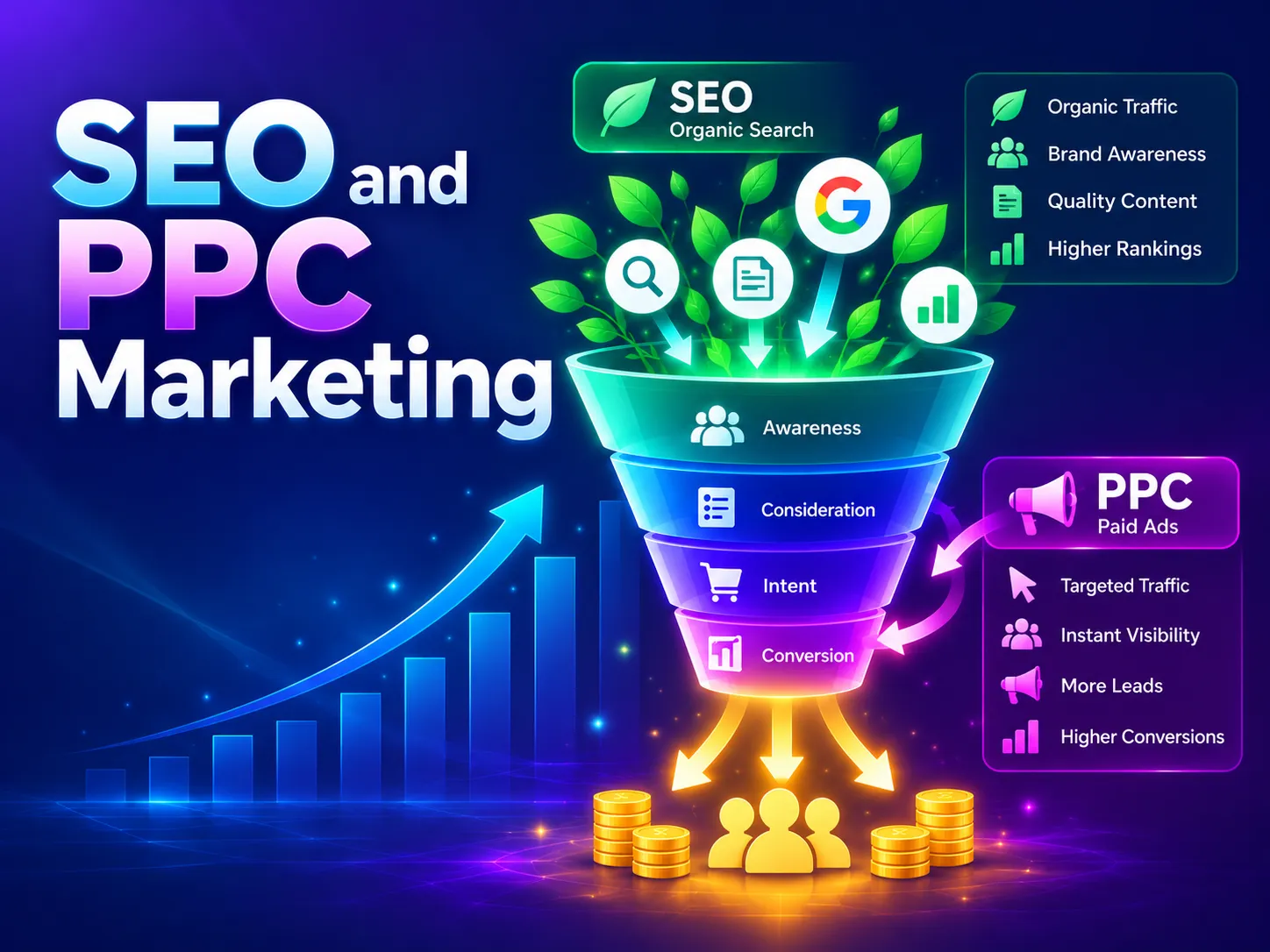
Think in Funnel Stages
The easiest way to understand how they fit is to think about the buyer's journey.
Awareness: Someone searches “why is my website not getting traffic.” They're not ready to buy. SEO content like guides and explainers is perfect here, because paying for those clicks gets expensive fast.
Consideration: They compare options, searching “best SEO agency for small business.” Both channels help. Organic reviews and comparison pages build trust, while ads put you in front of them.
Decision: They search “book SEO consultation.” This is where PPC shines. High intent, ready to act, and a good landing page converts them quickly.
When you map both channels to the funnel, you stop forcing one tool to do every job.
Five Ways SEO and PPC Help Each Other
1. Keyword testing. PPC shows you in days which keywords convert. SEO takes months to confirm the same thing. Use paid data to choose your content topics.
2. Search term discovery. Ad campaigns reveal the exact phrases people type, including odd long-tail queries you'd never guess.
3. Message testing. Try two headlines in ads. The winning one often makes a better title tag for your organic page.
4. Retargeting. Many organic visitors leave without acting. Ads can bring them back later.
5. Brand protection. Ranking organically and running a branded ad can keep competitors from taking space on your own name.
Does Running Both Cannibalize Your Traffic?
It's a common worry. If you rank first organically, should you still pay for the same keyword?
Sometimes yes, sometimes no. For branded terms where you already dominate, you might reduce ad spend and test the impact. For competitive commercial terms, appearing twice often increases total clicks and makes your brand look established. The answer is to test it for your business instead of following a rule.
Measuring SEO and PPC Marketing Together
The biggest mistake is judging each channel in isolation. Track these together:
• Leads and revenue by channel, not just clicks
• Cost per lead for paid, and organic leads over time for SEO
• Assisted conversions: someone clicks an ad, returns through organic search, then buys. Both played a part.
• Branded search growth, which often rises when both channels are active
Use proper conversion tracking in Google Analytics and Google Ads. Without it, you're managing blind.
Common Mistakes to Avoid
• Running ads to a slow, confusing landing page
• Writing SEO content with no thought for conversion
• Letting two vendors work separately with different goals
• Ignoring mobile experience
• Stopping SEO when results take longer than expected
A Simple Starting Plan
If you're beginning from scratch:
1. Fix tracking and basic technical SEO first.
2. Launch a small, focused PPC campaign on high-intent keywords.
3. Publish content around the topics that convert.
4. Review monthly and shift budget as organic rankings grow.
You don't need a huge budget. You need a clear plan and patience.
Final Thoughts
SEO and PPC marketing aren't a debate you have to win. They're two tools with different strengths. Use PPC for speed and testing, use SEO for compounding growth, and let the data guide how much you put into each. That's how steady, predictable marketing gets built.