




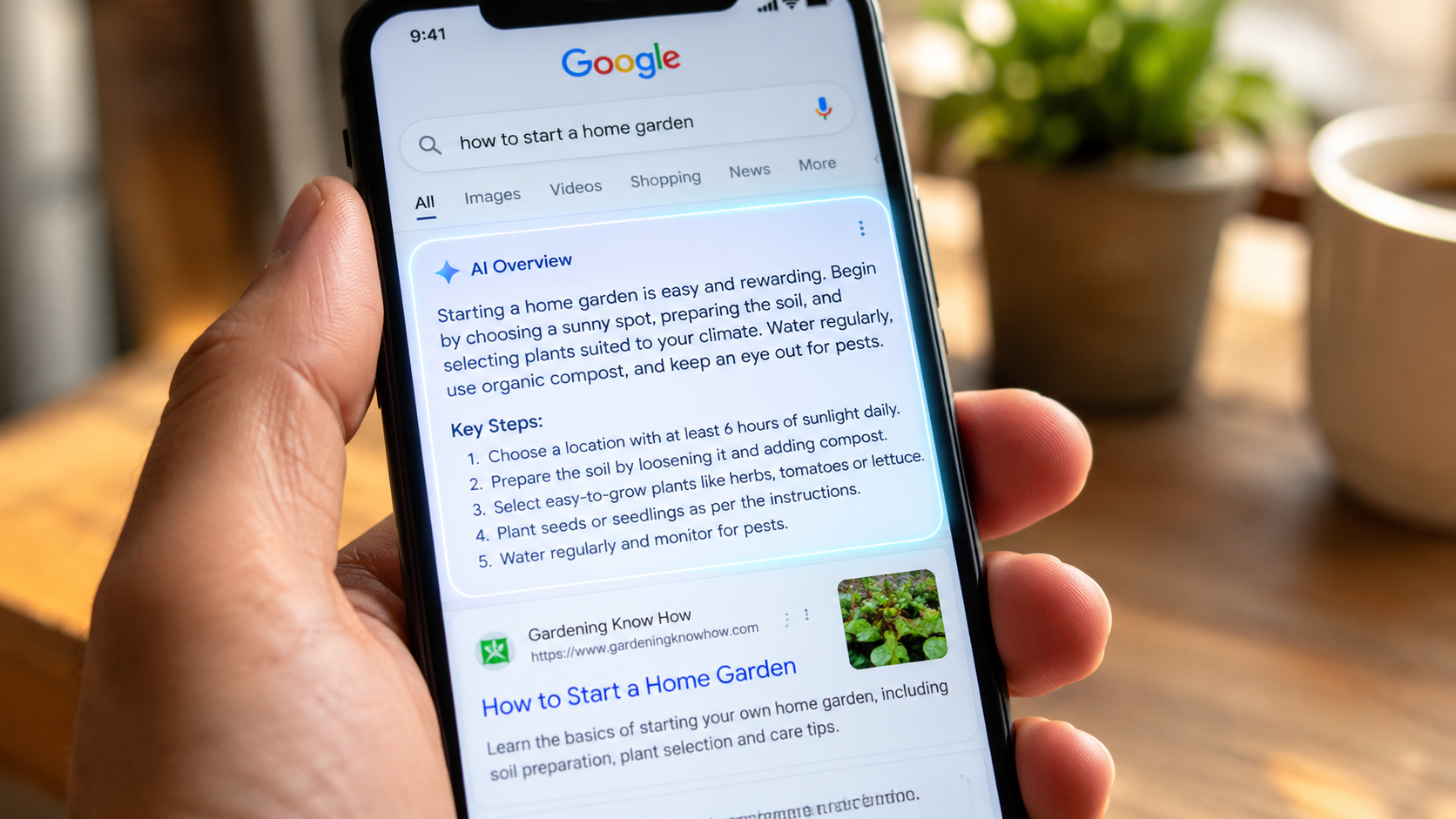
Google Search is becoming more than a list of blue links. With AI Overviews, Google can provide an AI-generated summary directly on the results page, giving users an answer before they visit a website.
For businesses and SEO professionals, this changes an important part of the search strategy: ranking is no longer the only goal.
A page can rank highly and still receive fewer clicks if Google's AI Overview answers the user's question immediately. At the same time, appearing as a source within an AI-generated answer can create valuable visibility and introduce a brand to users who may not have discovered it through traditional search.
The result is a shift from simply targeting keywords to understanding which searches deserve content, what users expect from that content, and where your website can provide information Google cannot easily replace.
Which Keywords Are Most Affected?
Not every search is affected in the same way.
Simple informational queries are often easier for AI systems to summarize. Searches such as “What is technical SEO?”, “What is a meta description?”, or “When was Google founded?” can often be answered in a few sentences.
For these searches, getting the top organic position may still be useful for visibility, but the click-through opportunity can be smaller.
More complex searches are different.
Queries involving comparisons, recommendations, products, services, costs, reviews, and specific situations often require more context and decision-making. A user searching for “best CRM for a small business” may want pricing, features, limitations, integrations, and real-world recommendations—not simply a short definition.
This creates an opportunity for websites that provide original, detailed, useful information.
Focus on Search Intent, Not Just Rankings
The traditional SEO question was:
“What keyword should we rank for?”
The better question now is:
“What does the user need after searching this keyword?”
If the query can be completely answered in two sentences, competing purely for that query may not generate significant traffic.
Instead, look for topics where users need research, explanation, comparison, experience, or a solution.
For example, instead of creating a basic article around “what is local SEO,” you could create a comprehensive guide covering local SEO factors, Google Business Profile optimization, local keyword research, citations, reviews, common mistakes, and practical implementation steps.
That type of content provides significantly more value than a simple definition.
How to Improve Your Content for AI Overviews
You don't need to write specifically for AI at the expense of human readers. Focus on making your content easy for both users and search systems to understand.
1. Answer the main question early
Give a clear, direct answer near the beginning of the article before expanding into deeper details.
2. Build topical depth
Cover important related questions and subtopics instead of repeating the same keyword throughout the page.
3. Use clear structure
Descriptive headings, short paragraphs, lists, tables, and FAQs make complex information easier to understand.
4. Add original value
Include examples, first-hand insights, data, comparisons, case studies, or expert perspectives where relevant.
5. Keep information accurate
AI-generated summaries depend on information available across the web. Accurate, well-supported content gives your website a stronger chance of being considered a useful source.
Tools Worth Using
Google Search Console — Monitor impressions, clicks, CTR, and search queries to identify changes in organic performance.
Google Gemini — Explore how users might phrase questions and identify related topics worth covering.
ChatGPT — Generate search-intent variations, content outlines, related questions, and potential topic clusters.
Semrush — Research keywords, competitors, SERPs, and content opportunities using detailed SEO data.
Ahrefs — Analyze keywords, backlinks, competitors, and content gaps to identify opportunities beyond basic rankings.
The 2026 SEO Takeaway
Google AI Overviews don't make SEO irrelevant. They make search intent and content quality more important.
Instead of measuring success only by rankings, look at the bigger picture: visibility, clicks, qualified traffic, citations, brand exposure, and conversions.
Prioritize searches where users need more than a quick answer. Create content that explains, compares, demonstrates, and helps people make decisions.
The future of SEO isn't simply about being the first result. It's about becoming one of the most useful sources behind the answer.