




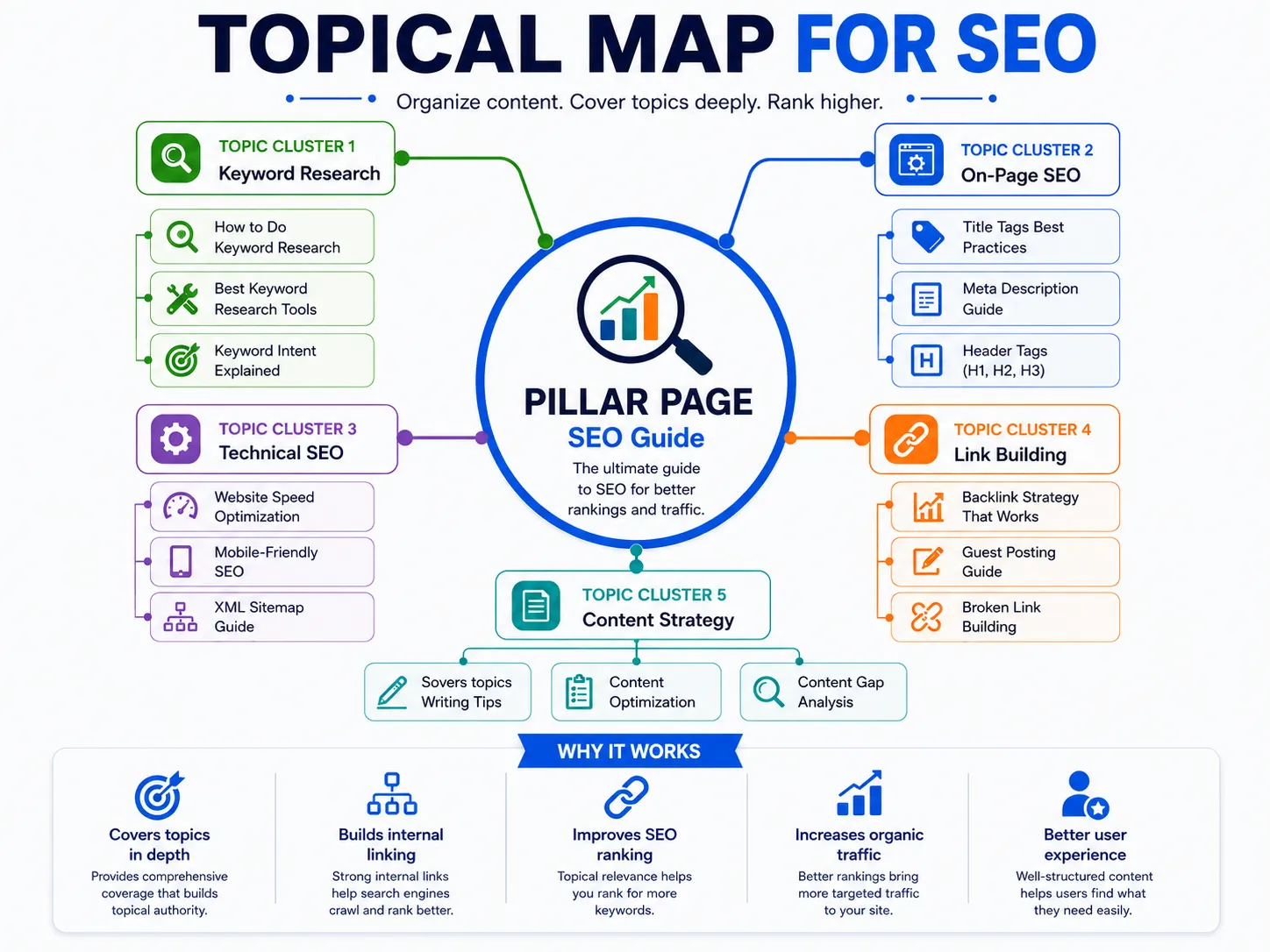
A topical map is a structured plan that organizes the main topics, subtopics, questions, and related concepts a website should cover.
Instead of publishing unrelated articles based only on individual keywords, a topical map creates connections between content.
For example:
SEO → Technical SEO → JavaScript SEO → React SEO → Next.js SEO
This creates a logical content hierarchy and makes it easier to identify what your website should cover next.
Why Is Topical Mapping Important in 2026?
Modern search engines look beyond exact-match keywords. They use context, relationships, entities, relevance, and search intent to understand content.
A topical map can help you:
- Build deeper coverage around important subjects
- Discover missing content opportunities
- Reduce repetitive articles
- Improve internal linking
- Organize your content more logically
- Build stronger topical relevance
The objective isn't simply to publish more content. It's to create useful, connected coverage around topics your audience actually searches for.
How to Build a Topical Map for SEO
1. Choose Your Core Topic
Start with the main subject you want your website to be associated with.
For example:
Core Topic: SEO
You could then create major topic clusters such as:
- Technical SEO
- On-Page SEO
- Content SEO
- Local SEO
- E-commerce SEO
- AI Search Optimization
2. Break Topics Into Subtopics
Expand each topic into specific subjects, problems, and questions.
For example, Technical SEO could include:
- Crawlability
- Indexing
- JavaScript SEO
- XML sitemaps
- Canonical URLs
- Structured data
- Website migrations
- Log file analysis
Each important subtopic can become a dedicated article or supporting resource.
3. Map Search Intent
Don't build your topical map around keywords alone.
Identify the intent behind each search.
Informational: What is JavaScript SEO?
Commercial: Best technical SEO tools
Transactional: Technical SEO services
Navigational: Google Search Console
Mapping intent helps you create the right type of content for each stage of the search journey.
4. Create Content Relationships
Your articles should not exist as isolated pages.
For example, a comprehensive JavaScript SEO article could internally link to:
- React SEO
- Next.js SEO
- Rendering
- Crawlability
- Indexing
- Core Web Vitals
These connections create a more useful content ecosystem for both users and search engines.
5. Find Content Gaps
Once your topical map is created, compare it with competitors and search results.
Look for:
- Important questions you haven't answered
- Subtopics competitors cover better
- Related searches you haven't addressed
- Topics that deserve deeper guides
- Existing pages that need supporting content
This turns your topical map into an ongoing content roadmap.
A Simple Topical Map Formula
Use this framework:
Core Topic → Topic Cluster → Subtopic → Search Intent → Content → Internal Links
Before creating a new article, ask:
“Does this page strengthen an important topic on my website?”
If yes, it has a clear role in your topical strategy.